PREN ≥ 40, CPT ≥ 50°C per ASTM G48 Method E, yield ≥ 550 MPa
Zeron 100 contains 25%
chromium and 7% nickel and 3.6% molybdenum along with copper and tungsten additions.
Zeron 100 has a 50–50 austenitic–ferritic structure. It also has greater resistance
to chloride pitting, crevice corrosion and stress corrosion cracking than exhibited
by the standard 300 series stainless steels. Zeron 100 is super duplex stainless
steel often recognised as UNS S32760. Zeron 100 has modified mechanical
properties as compared to grounded S32760. Zeron 100 has induced impact and tensile
test requirements as mentioned below. Zeron 100 is not recommended for uses
which involve extended exposure to temperatures greater than 572°F (300°C) as this
causes a substantial reduction in toughness. Zeron
100 is highly resistant to corrosion in a wide range of organic and inorganic
acids. The copper content gives excellent resistance to corrosion in many oxidising
acids. This alloy is also highly resistant to strong alkalis.
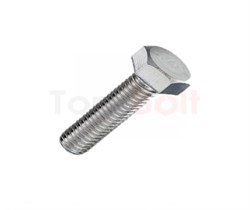
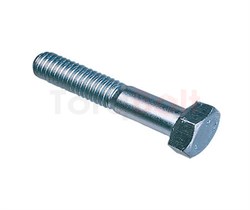
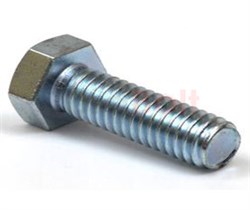
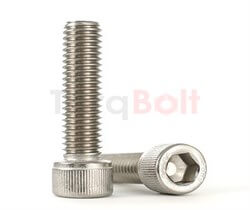
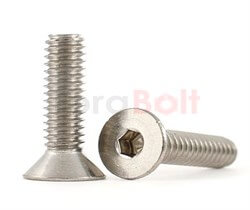
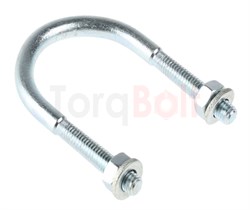
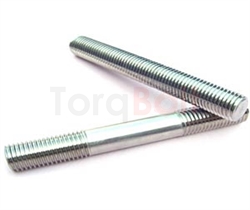
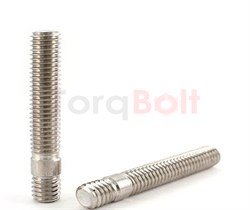
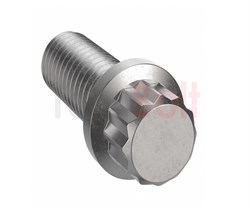
At TorqBolt we stock a huge variety of Studs, Heavy Hex Nuts, washers and headed
bolts along with their corresponding forgings, pipe fittings, flanges, pipes,
plates, sheets and bar stock, wire, wirelines, welding wire and covered electrodes.
Supply States, SA, FG, FLT, AFP
Equivalent Designations, UNS, Werkstoff, SAF
UNS
S32760
WerkStoff
1.4501
Steel Number
X2CrNiMoCuWN25.7.4
SAF
2507
Zeron 100 sits in the super duplex tier (PREN ≥ 40) alongside the Cu-bearing variant Ferralium 255 (UNS S32550) and the W-free Super Duplex 2507 (UNS S32750). Where Zeron 100's W contribution offers crevice-resistance margin, Ferralium 255's 2% Cu addition is preferred for reducing-acid service (HCl, H2SO4, phosphoric); 2507 is the most-stocked grade with the broadest standards coverage.
Corrosion Performance, HCl, H2SO4, Seawater, Sour Service
General Corrosion
Zeron 100 is highly resistant to corrosion in a wide range of
organic and inorganic acids. The copper content gives excellent resistance to corrosion
in many oxidising acids. Commercial acid applications often contain chlorides and other
impurities which can cause corrosion of some stainless steels. Zeron 100 offers much
improved corrosion performance in these environments.
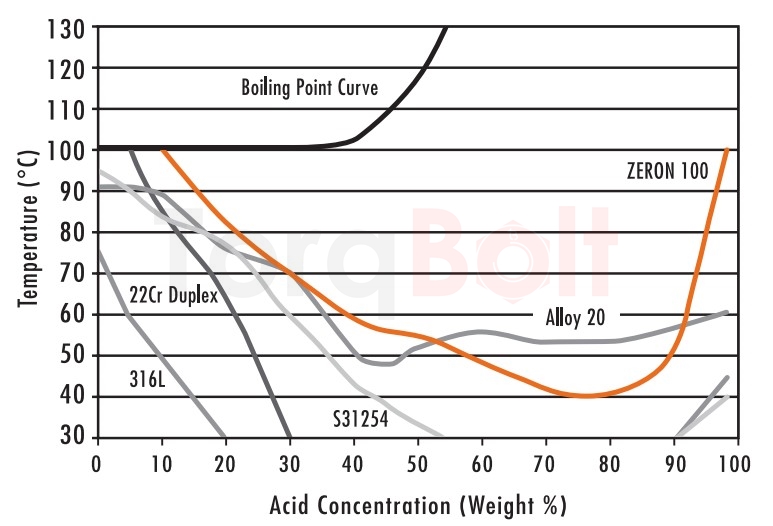
Figure 2 : Iso-corrosion curves 0.004 ipy (0.1mm/y) for some stainless
steels in Sulfuric Acid
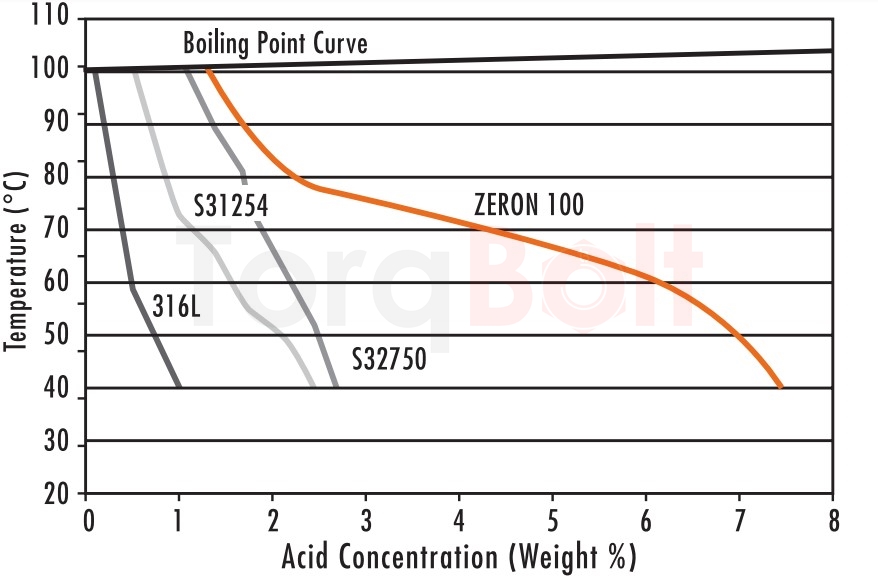
Figure 3 : Iso-corrosion curves 0.004 ipy (0.1mm/y) for some stainless
steels in Hydrochloric Acid
Strong-alkali resistance is similarly high. The
production of caustic soda results in hot, strong solutions and even in 60 wt% caustic
soda, Zeron 100 has very low corrosion rates (<0.004 ipy). Caustic soda is often
found with chlorides in extraction processes and even with 10g/L chloride, Zeron 100
has excellent corrosion resistance. Three years service experience of fabricated Zeron
100 pipework in 2M caustic soda with chlorides at 446°F (230°C) has been excellent.
Pitting Corrosion
Exposure to 6% FeCl3 for 24 hours in accordance with ASTM G48
method A to determine the maximum temperature at which no pitting occurs (the critical
pitting temperature, CPT), has given the following results:
Solution annealed wrought and cast Zeron 100: 158 - 176°F (70-80°C) depending on
product form and manufacturing route. Welded with Zeron 100X filler
metal: 95-140°F (35 - 60°C), depending on the welding variables, i.e. process, joint
geometry, procedure etc. These values are for single exposure testing; testing a
single specimen at a series of increasing temperatures gives a higher CPT value.
Crevice Corrosion
The resistance to localized corrosion is often assessed by use
of the PREN number (%Cr + 3.3 x %Mo + 16 x %N). The minimum PREN of
40, ensuring a guaranteed and high resistance to pitting and crevice corrosion. Zeron
100 has been in service in seawater since 1986 as castings, and since 1989 as wrought
pipes and fittings giving satisfactory performance. At sea water temperatures above
ambient, 68°F (20°C), the risk of crevice corrosion increases. Zeron 100 resists
crevice corrosion up to 131°F (55°C) but is limited by the pitting resistance of the
welds to about 104°F (40°C). With the application of post weld surface treatments,
seawater temperatures up to 149°F (65°C) have been handled successfully.
Repassivation
Short term elevated temperatures upsets are not uncommon in
cooling water circuits. Laboratory tests and field experience have shown that Zeron 100
does not suffer crevice corrosion easily during short upsets and, when corrosion does
initiate, repassivation occurs readily on cooling, and at temperatures higher than the
normal operating temperature of 104°F (40°C). Super austenitic steels and super duplex
steels that do not contain copper and tungsten have lower repassivation temperatures
than normal operating temperatures, so any corrosion that is initiated during the upset
will continue to propagate when the system reaches normal operating conditions once
more.
Stress Corrosion Cracking
Stress corrosion cracking (SCC) resistance is high in chloride and H2S/CO2 environments, this is what gets Zeron 100 onto sour-service projects
(SCC) in both chloride environments, and process environments containing H2S
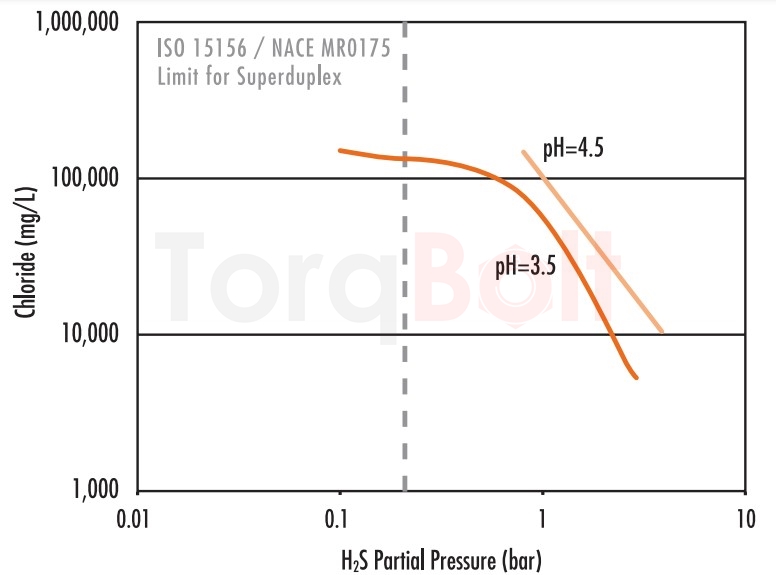
and CO2. Zeron 100 is listed in ISO 15156 / NACE MR0175 part 3 as being
suitable in sour service at 0.2 bar partial pressure of H2S. In brines with
lower chloride contents Zeron 100 can tolerate much higher pressures of H2S, as shown
in Figure 4. As the pH, at temperature and pressure, increases, so does the resistance
to sulfide SCC (Figure 4).
Figure 4 - Limits of use for Zeron 100 in brines containing H2S
Hydrogen Embrittlement
In common with all high strength steels, duplex and super duplex
stainless steels can be susceptible to hydrogen embrittlement if stressed above the
specified minimum yield strength in the presence of hydrogen. Hydrogen embrittlement
therefore becomes an area for consideration when these steels are used subsea with
conventional cathodic protection. However, the proper application of normal design
stress criteria and coating technology has allowed many subsea projects to utilize
duplex and super duplex stainless steels successfully for a number of years.
Solution-anneal at 1100-1140°C (2012-2084°F), then water-quench.
No precipitation hardening, no aging cycle, the duplex microstructure
(50/50 austenite-ferrite) develops the strength on its own.
Hot Forming
Hot forming of Zeron 100 should be carried out in the
temperature range 2012 - 2336°F (1100°C - 1280°C). It is recommended that this is
followed by solution annealing and water quenching. Components should subsequently be
pickled or fully machined.
Cold Forming
Cold forming Zeron 100 works across the usual processes, but plan for
the high yield strength, springback and tooling load are noticeably higher than 316L. It is recommended that any
cold work in excess of 10% -15% is removed by solution annealing and water
quenching.
Cold working beyond these limits raises hardness above the 28 HRC ceiling that
ISO 15156 / NACE MR0175 enforces for sour-service super duplex.
Welding
Where a solution anneal and quench as a post-weld heat treatment
is to be carried out, Zeron 100 is usually welded with matching composition consumables
(Zeron 100M). With overalloyed consumables (Zeron 100X), no post-weld heat treatment is
necessary. Corrosion and mechanical properties similar to the parent metal can be
obtained following recommended procedures. A separate brochure on the optimum
parameters for a range of welding operations is available from our Sales Department as
bulletin number 105.
Machining
Machining wants slightly more care than 300-series austenitics.
lower surface speed, sharper tooling, generous chip clearance. If heavy or uneven machining to tight tolerances is to be carried
out on wrought Zeron 100 components, machining should be carried out in stages. As a
last resort, a stress relieving heat treatment can be applied but this can result in a
reduction of toughness and corrosion resistance.
Testing Standards (ASTM A923, E562, G48 Method E)
ASTM A923 - Test Method A - Sodium Hydroxide
Etch Test for Classification of Etch Structures of Duplex Stainless Steels ASTM E562 - Standard Test Method for Determining Volume Fraction by
Systematic Manual Point Count ASTM G48 - Test Method A - Standard Test Methods for Pitting and
Crevice Corrosion Resistance of Stainless Steels ASTM A923 - Test Method C - Ferric Chloride Corrosion Test for
Classification of Structures of Duplex Stainless Steels